tree-service
How Much Does Tree Removal Cost in Denver, CO? (2026)
How much does tree removal cost in Denver, CO in 2026? Expect $600 to $1,800 for a medium tree and $2,500 to $5,000 for a cottonwood, plus ash borer costs.
In This Article
How Much Does Tree Removal Cost in Denver, CO? (2026)
Tree removal in Denver, CO costs about $600 to $1,800 for a medium tree of 30 to 60 feet in 2026, $250 to $650 for a small tree under 30 feet, and $1,800 to $5,000 for a large cottonwood, silver maple, or spruce over 60 feet. Denver sits near the national average for tree work, and the local variables that move a quote are the species, the emerald ash borer wave working through the metro, and the city's rule that any tree in the public right-of-way is the homeowner's responsibility to maintain but the city's to approve.
Denver's urban forest is not native. Nearly every large tree in the city was planted, and the mix of cottonwoods, silver maples, ash, elms, and blue spruce that shades Wash Park, Park Hill, and Highland is aging out at the same time. That has put steady demand on the metro's tree companies, and it means many homeowners are facing a removal for the first time.
The Ash Borer Changed the Market
Emerald ash borer was confirmed in Boulder in 2013 and reached Denver proper by 2021, and the metro has been losing ash trees since. Roughly one in six trees in Denver is an ash, and the borer kills untreated trees within a few years of infestation. Removal demand for dead and dying ash has kept crews busy across Arvada, Lakewood, Westminster, and the city itself.
A dead ash is more expensive to remove than a live one. The wood becomes brittle, branches snap unpredictably, and climbers cannot trust the limbs, so the job often moves to a bucket truck or a crane. A 50-foot dead ash in a Park Hill backyard that would have cost $1,200 to remove alive can cost $1,800 to $2,500 dead.
Treatment is the alternative for healthy ash. Trunk injection with emamectin benzoate every two years runs $10 to $15 per inch of trunk diameter, so a 20-inch ash costs $200 to $300 per treatment. For a mature ash that shades the house, that math favors treatment for a decade or more before removal becomes cheaper.
Which Ash Trees Are Worth Saving
Trees with more than 30% canopy dieback are usually past saving, and a certified arborist can assess that in a visit. Ash trees in the front yard that provide shade and value to the property are the best candidates for treatment, while ash trees in a back corner or crowding other species are often better removed and replaced.
Denver Prices by Tree Size and Species
Small trees under 30 feet, including crabapples, hawthorns, lilacs grown to tree size, and young maples, run $250 to $650 to remove. A two-person crew handles the job in a couple of hours, and most are dropped in one piece.
Medium trees from 30 to 60 feet, including mature honeylocust, linden, ash, and smaller elms and spruce, run $600 to $1,800. These are the most common removals in Denver neighborhoods, and the job takes a crew of three most of a day with climbing and rigging.
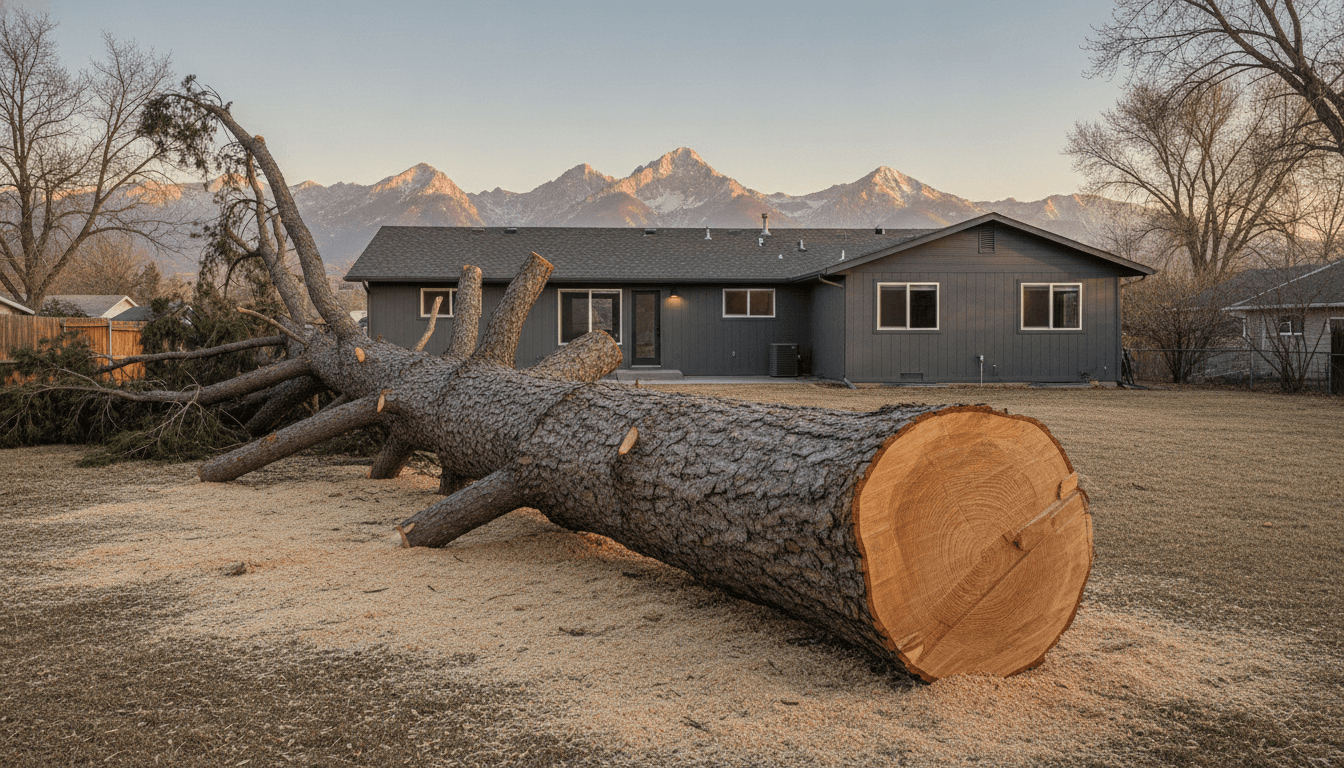
Large trees over 60 feet are where Denver's cottonwoods and silver maples come in. A plains cottonwood along the Platte or in the older neighborhoods of Littleton and Englewood can reach 90 feet with a 5-foot trunk, and removal runs $2,500 to $5,000 or more. A large blue spruce in Cherry Creek or Greenwood Village runs $1,800 to $3,500 because of the density and the weight.
A Reference for Denver Quotes
Here is what Denver metro homeowners are seeing on written quotes this year, with haul-away included and stump grinding separate:
| Tree | Height | Typical Denver cost |
|---|---|---|
| Small ornamental | Under 30 ft | $250 to $650 |
| Medium honeylocust, linden, or live ash | 30 to 60 ft | $600 to $1,800 |
| Dead ash, medium | 30 to 60 ft | $1,000 to $2,500 |
| Large cottonwood or silver maple | Over 60 ft | $2,500 to $5,000 |
| Large spruce | 50 to 80 ft | $1,800 to $3,500 |
| Stump grinding | Per stump | $100 to $400 |
Figures are approximate. Quotes in Cherry Hills Village, Greenwood Village, and Boulder often run above these ranges, and quotes in Aurora, Commerce City, and the northern suburbs often sit near the bottom.
What Moves a Denver Quote
Access is the biggest variable. Denver's older neighborhoods have alley access that makes removals easier than in most cities, since a crew can often set a chipper truck behind the house. Newer subdivisions in Highlands Ranch, Parker, and Castle Rock have no alleys, tight side yards, and fenced backyards that require every piece to be carried or rigged over the house.
Proximity to structures and lines comes next. A tree over the house, a garage, or the neighbor's fence takes twice as long as one in an open yard, and any branch within 10 feet of a high-voltage line must be handled by a line-clearance crew. Xcel Energy trims near its own lines at no charge and homeowners can request it.
Condition matters, especially with the ash wave. Dead and brittle trees cost more, as do trees that have been storm-damaged. Denver's late spring snowstorms and summer microbursts leave a lot of split cottonwoods and half-fallen elms every year, and emergency removal of a tree on a roof runs 50% to 100% above a scheduled job.
Cottonwoods and the Volume Problem
Cottonwoods are the most expensive tree to remove in the metro for their size, because the wood is soft, heavy with water, and the trunks are enormous. A large cottonwood can fill three or four chipper truck loads, and some companies charge extra for debris beyond the first load. Stump grinding on a 48-inch cottonwood stump runs $300 to $500 alone.
Permits, Right-of-Way Trees, and Licensing
Denver does not require a permit to remove a tree on private property, which sets it apart from cities like Portland or Los Angeles. Trees in the public right-of-way, the strip between the sidewalk and the street, are different. Homeowners are responsible for maintaining them, but removal requires a permit from Denver Forestry, and a licensed tree contractor is required for the work.
Denver requires tree contractors working on right-of-way trees to hold a city arborist license, and many suburbs including Aurora, Lakewood, and Boulder have their own contractor licensing for tree work. Ask for the license number and confirm it with the city.
Insurance is what protects you on private trees. Ask for a certificate showing at least $1 million in general liability and confirm workers' compensation is current, because a climber injured in a 70-foot cottonwood without comp coverage becomes a claim against your policy. You can compare tree service companies serving the Denver metro and check licensing and insurance on each before scheduling a visit.
Timing and Ways to Save
Winter is the value season in Denver. Tree companies have open calendars from December through February, deciduous trees are dormant and lighter without leaves, and many companies discount 10% to 20% for non-emergency removals. Frozen ground also protects the lawn from truck and chipper damage.
Storm season is the opposite. After a May snowstorm or a July microburst, demand spikes and emergency rates apply, and crews prioritize trees on structures. If a tree is leaning after a storm but not on the house, expect to wait a week or two and pay a premium.
Bundling saves money. Combining a removal with pruning on other trees, or coordinating with a neighbor who also needs work, spreads the setup and travel cost across more work. For more on hiring outdoor trades and comparing quotes across Colorado, the home services blog covers every service.
Frequently Asked Questions
Do I need a permit to remove a tree in Denver?
Not for a tree on private property. Trees in the public right-of-way between the sidewalk and the street require a permit from Denver Forestry and a city-licensed contractor, even though the homeowner is responsible for the cost.
How much does it cost to remove a dead ash tree in Denver?
A medium dead ash of 30 to 60 feet typically costs $1,000 to $2,500 to remove in the Denver metro, which is 30% to 60% more than a live tree of the same size because the brittle wood requires a bucket truck or crane rather than climbing.
Is it cheaper to treat an ash tree than remove it?
For a healthy mature ash, yes. Trunk injection every two years runs $200 to $400 for a typical tree, and a decade of treatment often costs less than removal plus replacement. Trees with more than 30% canopy dieback are usually past saving.
How much does it cost to remove a large cottonwood?
A mature plains cottonwood over 60 feet runs $2,500 to $5,000 to remove in Denver, with the largest specimens along the Platte and in older Littleton and Arvada neighborhoods exceeding $6,000 once crane access and stump grinding are included.
Will Xcel remove a tree near power lines for free?
Xcel Energy trims and removes trees that threaten its high-voltage distribution lines at no charge when requested. Trees near the service drop to your house are your responsibility, and a private company handles those.